
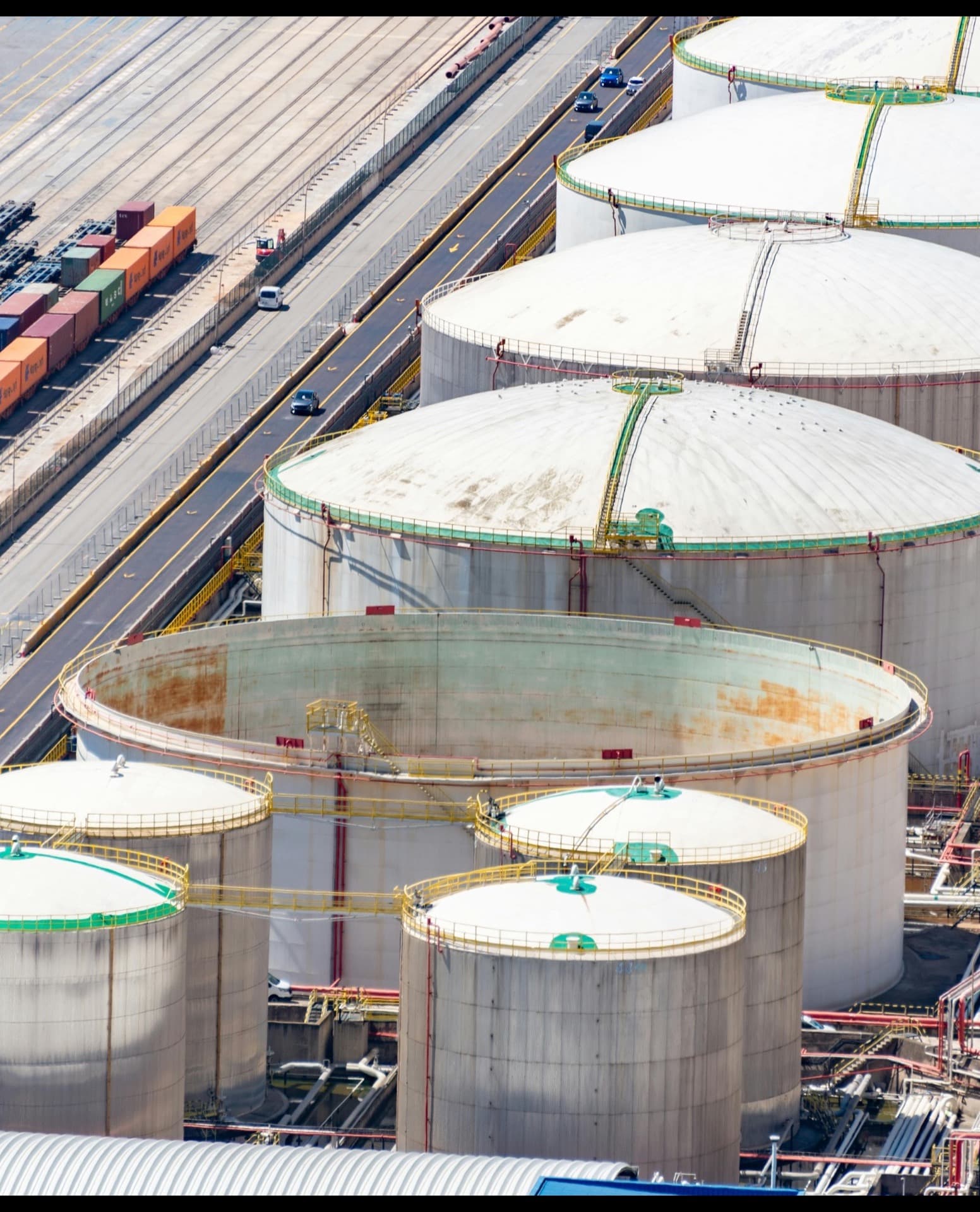
Asset integrity management (AIM) is the discipline that decides whether a fifteen-year-old vessel stays in service for another five years, gets a partial repair, or comes out of the train entirely. In KSA, where many oil and gas, petrochemical, and power assets are now well into their second or third decade and capital pressure makes "replace it" the wrong default answer, the quality of the AIM programme is what keeps production up and the regulator satisfied.
This guide is a practical seven-step walk-through of how a mature AIM programme runs on a Saudi refinery or gas plant. Each step is grounded in the API standard that governs it, but the framing is operational: what an integrity engineer actually does in week one, what evidence a corporate auditor asks for in month six, and where most programmes fall over in year three.
Standards behind a KSA AIM programme
The seven steps at a glance
A credible programme is a closed loop, not a one-off study. The steps are:
- Define the asset register and circuit boundaries.
- Screen the whole site with qualitative RBI.
- Prioritise high-risk circuits with semi-quantitative or quantitative RBI.
- Plan inspection campaigns and assign the right methods.
- Execute, then feed every finding back into the integrity data management system (IDMS).
- Trigger a fitness-for-service assessment when a defect exceeds the inspection-code allowable.
- Close the loop with a repair, re-rate, or run-to-failure decision.
Most of the value comes from steps 2 and 6: getting the RBI screen calibrated to the actual damage mechanisms in the unit, and knowing when to escalate from "inspect again next turnaround" to a proper API 579 Level 2 calculation.
Step 1: Define the asset register and circuit boundaries
Nothing downstream works if the register is wrong. Before any risk ranking, confirm the equipment list, group piping into corrosion circuits with shared damage mechanisms, and fix the condition monitoring locations. A register that misses dead legs or lumps dissimilar circuits together will quietly corrupt every risk number that follows.
Step 2: Screen the whole site with qualitative RBI
Qualitative RBI is the wide net. With modest data, it ranks equipment by likelihood and consequence of failure so the team can see where risk concentrates. API 580 sets the framework; API 581 provides the quantitative methodology when you need it later. The three approaches trade effort against precision:
| Qualitative | Semi-quantitative | Quantitative | |
|---|---|---|---|
| Input data required | Low | Medium | High |
| Effort and cost | Low | Medium | High |
| Output | Risk bands | Ranked risk | Numeric risk |
| Typical use | Whole-site screen | Circuit prioritisation | High-consequence equipment |
The single biggest determinant of RBI quality is whether the likelihood model reflects the damage mechanisms actually present, such as sulphidation, CUI, or chloride stress corrosion cracking. A generic screen that ignores the unit's real corrosion history produces confident, wrong answers.
Step 3: Prioritise high-risk circuits with semi-quantitative RBI
Apply the heavier semi-quantitative or quantitative analysis only where the qualitative screen flags elevated risk. This is where the programme earns its keep: tightening intervals on the equipment that needs it and safely extending them on the equipment that does not, rather than inspecting everything on a fixed calendar.
Step 4: Plan inspection campaigns and assign methods
RBI outputs become an inspection plan: what to inspect, when, and with which technique. The in-service codes set the maximum intervals that plan must respect.
Source: API 510 §6.5, API 570 §6.3, API 653 §6.4. Default maxima; RBI may extend, remaining-life rule may shorten
Method selection matters as much as timing. Wall-thickness monitoring, surface crack detection, and volumetric examination each answer different questions, and the right choice depends on the damage mechanism, not habit. Our primer on NDT methods and standards used across KSA covers how those techniques map to defect types.
Step 5: Execute, then feed findings into the IDMS
An inspection that does not update the integrity data management system is wasted. Every thickness reading, every indication, and every NCR must flow back into the IDMS so the next RBI cycle works from reality rather than the original assumptions. This is also where independent verification protects the operator: see our buyer's guide to third-party inspection in Saudi Arabia for what good reporting discipline looks like.
Step 6: Trigger fitness-for-service when a defect exceeds the allowable
When an inspection finds metal loss, cracking, or other damage beyond the inspection-code allowable, the question is no longer "is it within limits" but "can it keep operating safely". That is a fitness-for-service assessment under API 579-1/ASME FFS-1, which offers three escalating levels of rigour.
| Level 1 | Level 2 | Level 3 | |
|---|---|---|---|
| Conservatism | Highest | Moderate | Lowest |
| Analysis | Charts and tables | Closed-form calculations | FEA / numerical |
| Typical performer | Plant inspector | Integrity engineer | FFS specialist |
Start at Level 1. Escalate to Level 2 when the conservative screen fails but the equipment is likely still serviceable, and to Level 3 only when the consequences or the geometry justify numerical analysis. Jumping straight to Level 3 is expensive and often unnecessary.
RBI tells you where to look. Fitness-for-service tells you what a finding means. A programme that does the first without the second is just generating reports nobody can act on.
Step 7: Close the loop with repair, re-rate, or run-to-failure
The FFS outcome drives a decision: repair to restore the original rating, re-rate the equipment to a lower safe condition, or run it to a planned replacement with monitoring in place. Each decision is documented, fed back into the register, and used to revise the next inspection interval. The loop closes and starts again.
Where KSA programmes fall over
Most programmes do not fail at launch. They fail in year three, for predictable reasons:
- Inspection findings stop reaching the IDMS, so the risk model drifts from the real condition of the plant.
- The RBI screen is never recalibrated after new damage mechanisms appear.
- Fitness-for-service is treated as a one-off rescue rather than a routine step in the loop.
- Ownership fragments between operations, inspection, and engineering, and no single function owns the data.
How IES supports asset integrity
IES brings the inspection workforce and the reporting rigour that an AIM programme depends on, from RBI-driven inspection campaigns through to the documentation an FFS decision rests on. If you are standing up or auditing a programme, talk to our team about scope, codes, and mobilisation from Jubail.
Questions buyers ask us
Asset integrity management is the structured discipline of keeping pressure equipment, piping, and tanks safe and fit for service across their operating life. It links risk-based inspection planning, in-service inspection, and fitness-for-service assessment into one decision loop so an operator can justify whether equipment stays in service, gets repaired, or is retired.
Risk-based inspection (API 580/581) decides what to inspect, how often, and with which method, based on the likelihood and consequence of failure. Fitness-for-service (API 579-1/ASME FFS-1) is a separate engineering assessment that decides whether equipment with a known flaw can keep operating. RBI plans the inspection; FFS interprets a finding that exceeds the code allowable.
Under the API in-service codes, the default maximum internal or on-stream interval is ten years for pressure vessels (API 510) and storage tanks (API 653), and five to ten years for piping depending on class (API 570). These are maxima: a remaining-life calculation can shorten them, and a validated RBI assessment can extend them within code limits.
No. Most programmes begin with a qualitative screen across the whole site to find the higher-risk equipment, then apply semi-quantitative or quantitative RBI only to the circuits that warrant the extra effort. Starting fully quantitative is expensive and usually unnecessary.